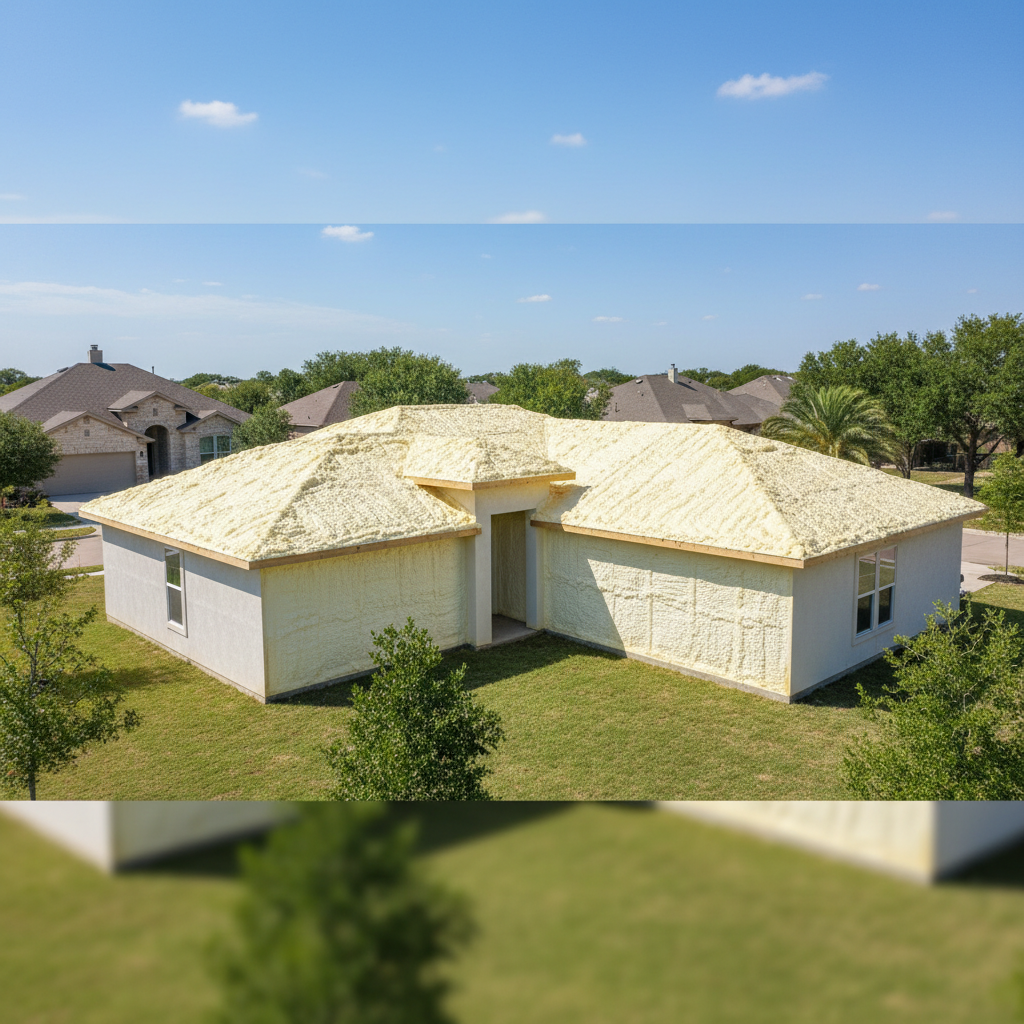
Alright, let's talk open cell spray foam. You've probably heard the buzz, seen the ads, or maybe even had a buddy tell you about it. It's a popular option, especially here in San Antonio, and for good reason. But like anything else, it's not a magic bullet for every single situation. You gotta know what you're getting into, and that's what I'm here to help you with.
What Even Is Open Cell Spray Foam?
So, you've got two main types of spray foam: open cell and closed cell. Today, we're focusing on open cell. Think of it like a sponge. When it cures, it's soft, flexible, and full of tiny, interconnected air pockets. That's why it's called 'open cell' – the cells aren't completely sealed off from each other. This structure is what gives it some of its best qualities, but also its limitations.
It expands like crazy when it's applied, filling every little nook and cranny. That's a huge deal for air sealing, which is probably the most important thing you can do for energy efficiency in your home, especially down here where the heat just beats down on us for half the year.
Why Open Cell Works Well in San Antonio
You know how hot and humid it gets here, right? Our summers are brutal, and even our winters can be surprisingly damp. Open cell foam is fantastic for a few reasons that really hit home for us:
- Air Sealing Champion: This is its superpower. It creates an incredible air barrier. In San Antonio, air leakage is a massive problem. All that conditioned air you're paying for? It's sneaking out through gaps, cracks, and poorly sealed attics. Open cell stops that cold, or hot, depending on the season. You'll feel the difference in comfort, and you'll see it on your CPS Energy bill.
- Moisture Management: This is where it gets interesting. Because it's 'open,' it's vapor permeable. That means if moisture gets into your wall cavity or attic, it can actually dry out. This is a big plus in our humid climate. You don't want moisture trapped behind an impermeable barrier, because that's how you get mold and rot. With open cell, if you have a roof leak, you'll likely see the staining, which tells you there's a problem you need to fix, rather than having it silently fester behind closed-cell foam.
- Sound Dampening: Ever notice how noisy it can get, especially if you live near a busy street or in a more established neighborhood like Alamo Heights where homes are closer together? Open cell foam is excellent at absorbing sound. It's not just about energy; it's about making your home a more peaceful place to live.
- Cost-Effective: Generally speaking, open cell is less dense and uses less material than closed cell, so it tends to be more budget-friendly per square foot. That's a big consideration for many homeowners.
Common Projects Where We Use It
For us at San Antonio Spray Foam Insulation, we often recommend open cell for certain applications:
- Attics: This is probably the most common. We'll spray it right on the underside of your roof deck. This brings your attic space into the conditioned envelope of your home. Suddenly, your attic isn't 140 degrees in July. Your AC unit, if it's up there, works way more efficiently, and your whole house feels better.
- Wall Cavities: If you're doing a renovation or new construction, open cell is a fantastic choice for filling wall cavities. It seals them up tight, improving both thermal performance and soundproofing.
- Crawl Spaces: While closed cell has its place here, open cell can also be used effectively, especially if you're encapsulating the crawl space and managing moisture actively.
Why Local Expertise Matters
Look, anyone can spray foam. But knowing how to spray it, and more importantly, knowing where and when to use open cell versus closed cell in our specific San Antonio climate? That's where experience comes in. You've got to understand our building codes, our humidity levels, and how our homes are constructed.
For example, if you've got an older home in an area like Monte Vista with a lot of plaster and lathe, or unique construction, the approach might be different than a newer build out in Stone Oak. You need someone who's seen it all and understands the nuances. We're not just selling foam; we're selling solutions tailored to *your* home and *our* environment.
Don't just go with the cheapest bid. Ask questions. Make sure the contractor understands the specifics of open cell, its vapor permeability, and how it interacts with our local conditions. It's an investment, and you want to make sure it's done right the first time.