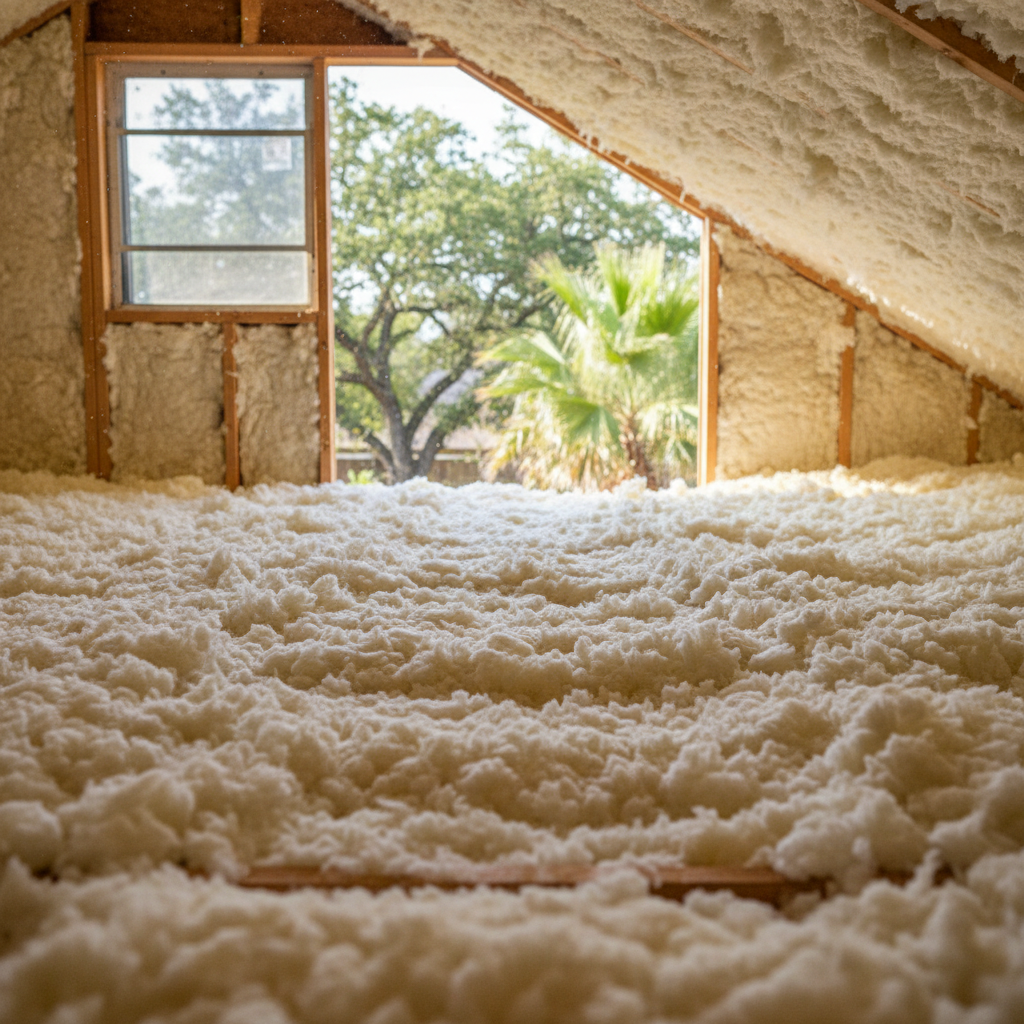
Alright, let's talk attic insulation. As a local contractor here in San Antonio, I get a lot of the same questions from homeowners trying to figure out what's best for their place. It's not always straightforward, and there's a lot of info out there, so I figured I'd just lay out the answers to the most common stuff I hear. No fluff, just what you need to know.
What's the 'R-value' everyone talks about, and why does it matter for my San Antonio home?
R-value is basically a measure of thermal resistance. Think of it as how well your insulation stops heat flow. The higher the R-value, the better it insulates. For us here in San Antonio, with our scorching summers and those occasional chilly snaps, a good R-value is critical. You want to keep that 100-degree heat out in July and hold your warmth in when it dips into the 30s in January. The Department of Energy recommends R-38 to R-60 for attics in our climate zone (Zone 2). If your attic is only rocking R-19 or R-30, you're probably losing a lot of conditioned air and paying for it on your utility bills. It's a big deal for comfort and your wallet.
Do I really need to remove old insulation before adding new?
This is a common one, and the answer isn't always a simple yes or no. If your existing insulation is dry, hasn't been contaminated by pests (rodents, insects), or hasn't suffered water damage, you can often add new insulation right on top. We do it all the time. However, if it's moldy, damp, smells like animal droppings, or is compressed and lost its R-value, then yeah, you absolutely need to remove it. You don't want to trap moisture or nasty stuff in your attic. Plus, if it's compacted, it's not doing its job anyway. We'll always inspect it first and give you an honest assessment.
Is spray foam insulation really worth the extra cost compared to traditional options?
For a lot of San Antonio homes, especially with our climate, I'd say yes, it often is. Look, traditional insulation like fiberglass or cellulose is good, it does the job. But spray foam, particularly closed-cell, does a few things those can't. It creates an air seal, which is huge. Here in San Antonio, air leakage is a massive problem because of our expansive clay soils causing foundation shifts and cracks. Those tiny gaps let in hot, humid air like crazy. Spray foam expands and seals those gaps, drastically reducing air infiltration. It also adds structural rigidity and doesn't sag or settle over time. You get better sound dampening too. The upfront cost is higher, but the long-term energy savings and improved comfort can make it a really smart investment for your home.
My attic gets blazing hot. Will insulation actually make my house cooler?
Absolutely. Think of your attic as a giant heat trap. Without proper insulation, that heat just radiates down into your living space, making your AC work overtime and struggle to keep up. Good insulation, especially when combined with proper attic ventilation, creates a barrier. It slows down that heat transfer from your superheated attic into your home. It won't make your attic cool like your living room, but it will dramatically reduce the amount of heat that penetrates your ceiling, making your AC more efficient and your home much more comfortable. We've seen homes in neighborhoods like Alamo Heights or Stone Oak drop their indoor temps by several degrees just from a proper insulation job.
What's the deal with attic ventilation? Does it work with insulation or against it?
They work together, hand in glove. Insulation slows heat transfer, and ventilation helps remove heat and moisture from the attic space itself. In the summer, proper ventilation – like soffit and ridge vents – allows hot air to escape, drawing in cooler air from outside. This helps keep the attic temperature down, making your insulation's job easier. In the winter, it helps prevent moisture buildup, which can lead to mold and rot. You need both for an efficient, healthy attic. You don't want to just seal up your attic without considering how air moves through it. It's a system, not just a pile of material.
How long does attic insulation typically last? When should I consider replacing it?
The lifespan really depends on the type and conditions. Fiberglass batts can last 50-100 years if undisturbed and kept dry. Blown-in cellulose or fiberglass can last just as long. Spray foam? That stuff's practically permanent once it cures. The main reasons you'd need to replace it aren't about the material failing, but external factors. Water damage from a leaky roof, pest infestations (squirrels, raccoons, even bats love a cozy attic), or significant dust and debris accumulation can compromise its effectiveness. If you're seeing higher energy bills, uneven temperatures, or signs of critters in the attic, it's time for us to come take a look. Don't wait until you've got a full-blown critter condo up there.
Hopefully, this clears up some of those questions you've had rolling around. Getting your attic insulation right is one of the best investments you can make in your San Antonio home's comfort and efficiency. If you've got more questions or want us to come out and take a look at your attic, don't hesitate to give San Antonio Spray Foam Insulation a call. We're here to help.